Google Research at I/O 2026
A catch-up read on Google's research direction across Gemini for Science, computational discovery, Earth AI, and useful applied AI systems.
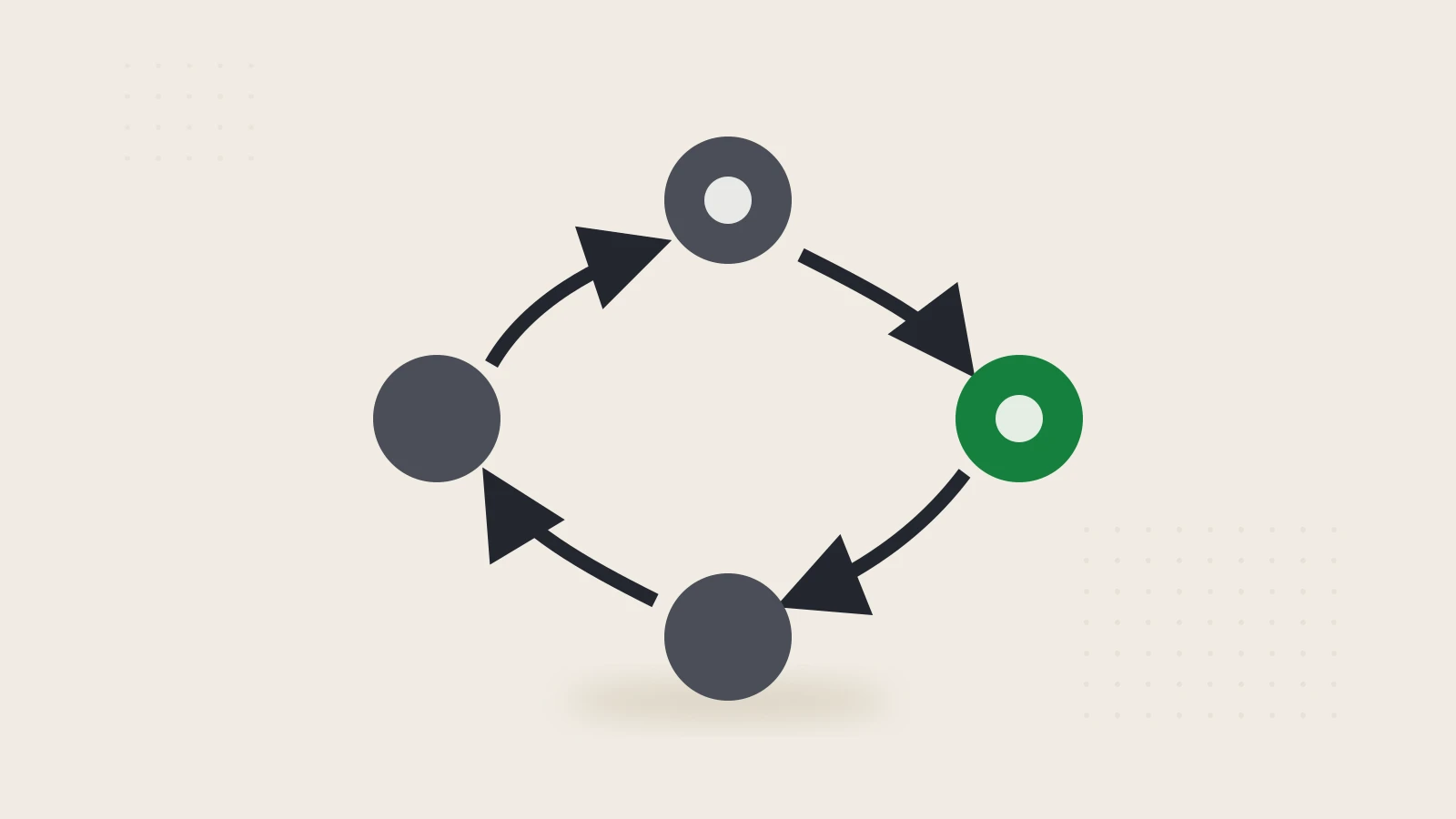
The most interesting AI products coming out of Google Research don’t look like chat. They look like systems that help experts move through an entire research loop — hypothesis, code, experiment, evaluation — faster than they could alone.
Source
A New Era of Discovery: Google Research at I/O 2026
By: Google Research
Published: May 28 2026
Type: Report
This is a useful annual catch-up because it shows where Google’s AI research is going outside the model-comparison race. The focus on scientific tools, health systems, and Earth AI reveals a different product shape from chat.
Where AI research goes when it moves past chat
The core theme across Google’s I/O 2026 research showcase is AI as a collaborator in expert workflows, not an answer machine. The most concrete examples come from Gemini for Science, a suite of experimental tools built with Google Cloud, DeepMind, and Google Labs.
Empirical Research Assistance (ERA) is a code-optimising research engine, published in Nature. Given a well-defined problem and a scoring system, ERA proposes new concepts, writes code, evaluates results, then searches through thousands of code variants using tree search to optimise performance. The unit of work is the research loop: hypothesis, code, experiment, score, iterate. Practical results include predicting hospital admissions for respiratory illnesses and forecasting seasonal runoff across California’s river basins.
Co-Scientist is a multi-agent system based on Gemini that works as a collaborative AI partner, also published in Nature. A coalition of specialised agents iteratively generate, evaluate, and refine hypotheses. Researchers have used it for antimicrobial resistance, plant immunity, and liver fibrosis studies. The system runs what the article calls a multi-agent “idea tournament” — agents propose hypotheses, debate them, and rank them, with claims supported by clickable citations.
These two systems feed into larger tools. Computational Discovery combines ERA and AlphaEvolve as an agentic research engine that generates and scores thousands of code variations in parallel, letting scientists test hypotheses and modelling approaches that would take months manually. Hypothesis Generation uses Co-Scientist to define research challenges and run the idea tournament. Literature Insights uses NotebookLM to synthesise findings across papers. And Science Skills are agent skills that automate workflows like structural bioinformatics and genomic analyses in minutes rather than hours.
A separate effort, Gemini Deep Think, applies advanced agentic reasoning to open mathematical and scientific problems. Collaborating with mathematicians, physicists, and computer scientists, it solved previously unsolved network deadlock puzzles, settled a decade-old optimisation conjecture, and resolved physics singularities in cosmic strings.
The health research shows the same pattern at a different scale. The AMIE system (published in Nature Medicine) interprets multimodal clinical data — medical histories, lab results, complex images. In a study with 13,917 participants, independent clinicians preferred Symptom AI’s differential diagnoses about twice as often as those from other clinicians. MedGemma, an open-weight medical foundation model, now has over 5 million downloads.
Earth AI extends the pattern to planetary data. WeatherNext predicted Hurricane Melissa’s rapid intensification and Jamaican landfall with high confidence five days in advance. A new technique called Groundsource used Gemini to convert 20 years of unstructured news reports into 2.6 million records for training urban flash flood prediction models. Flood forecasts now cover 2 billion people across 150 countries.
The common thread: AI helping experts search, simulate, reason, and decide what to try next. Code generation, hypothesis testing, literature synthesis, weather forecasting, clinical reasoning — each application pairs a model with domain-specific data and workflow tools. The product shape is a loop, not a conversation.
My take
What’s revealing is the gap between how people discuss AI (chat, benchmarks, model comparisons) and where the research teams are actually investing. ERA and Co-Scientist aren’t chat products — they’re closed-loop systems that generate, evaluate, and iterate without waiting for a human to type the next prompt. That’s a fundamentally different product architecture. The challenge is that each one requires deep domain integration (scoring systems for ERA, clinical data for AMIE, geospatial data for Earth AI), which means the approach doesn’t generalise easily. But the pattern — model + domain data + agentic loop — is worth watching because it shows up in every section of this post, regardless of the domain.
Where this is useful
- When thinking about what AI products look like beyond chat — the “agentic research loop” pattern (hypothesis → code → evaluate → iterate) appears in science, health, and climate, and likely applies to engineering and business analysis too.
- When evaluating whether to build domain-specific AI tools — the consistent theme is that domain data plus a capable model plus a structured loop produces results that a general chat interface can’t.
- When you need to synthesise large volumes of information (papers, medical records, weather data) — tools like Literature Insights and Groundsource show that AI-powered synthesis can work at scales humans physically can’t cover.
Apply this: If your team uses AI mostly for chat-style Q&A, ask whether the actual workflow is a loop (search → try → evaluate → refine). If it is, the product opportunity is in closing that loop, not in making the chat better.
What I want to remember
Remember: The strongest AI products may not look like chat. They look like systems that help experts move through a whole research loop faster — hypothesis, code, experiment, evaluation, iteration. The model is one piece; the domain data and the loop structure are the other two.