Cloudflare's Agent Development Lifecycle
A sharp Cloudflare article about why agent-driven software needs APIs, previews, observability, and lifecycle design beyond the normal SDLC.
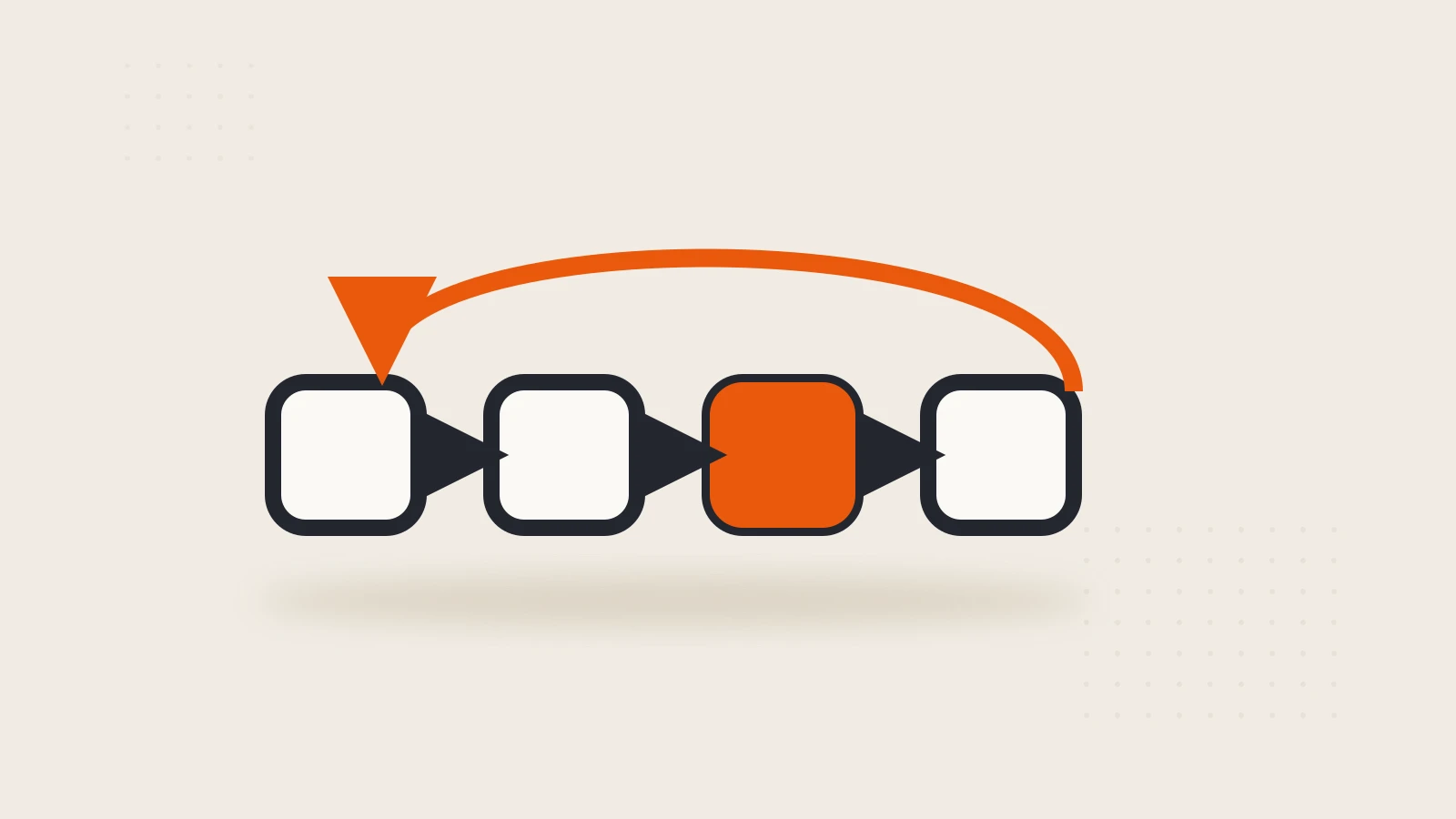
For fifty years the Software Development Lifecycle assumed its slowest, most expensive step was writing the code. AI just made that step the fastest and cheapest — so why does everyone feel more overloaded, not less?
Source
The Agent Development Lifecycle has arrived on Cloudflare
By: Cloudflare (Brendan Irvine-Broque)
Published: Aug 04 2026
Type: Engineering article
I saved this because it names the thing I keep seeing in coding-agent workflows: agents write code faster than humans can review and deploy it, and the old process cracks under the volume. Cloudflare’s framing goes further — the phases survive, but every assumption between the phases has to change.
From software teams to software factories
The article’s starting observation is that AI didn’t remove the SDLC’s bottleneck, it moved it. Implementation was the expensive step; now the cost lands downstream — open-source maintainers drowning in thousands of machine-generated pull requests, production engineers absorbing delivery rates that grew by orders of magnitude. Cloudflare’s line for this is blunt: “We are all trying to save our systems, our customers, and ourselves from slop.”
Their counter-intuitive answer is to give agents more control, not less. The argument: you would never let an engineer write code while someone else validates it, merges it, deploys it, and holds the pager — yet that’s exactly how most companies treat agents today. The model writes; humans do everything that matters. A “software factory,” in their definition, inverts this: a production error, a customer bug report, or a feature idea goes in, and an agent owns the whole path — build, verify, ship, observe, fix.
What makes the article worth reading isn’t the vision, it’s the requirements list. When an agent drives, every manual interface between lifecycle steps must become:
- Programmatic — “ClickOps” was bad for humans and is a non-starter for agents; every operation needs an API.
- Horizontally scalable — not “a” staging server but a preview environment per agent, matching production.
- Reproducible — including bugs that only appear on a simulated 4G iPhone or from a specific country’s IP, which ordinary test suites can’t touch.
- Real-time and push-based — nobody, human or agent, should discover trouble by staring at a dashboard; work should be triggered by events.
- Atomic — each change independently testable, releasable, observable, and reversible.
- Permissioned — agents need scoped escalation paths, because “just SSH into prod” is exactly what you can’t grant them.
- Self-improving — agents need a mechanism to learn from each session, the way a new hire does.
The self-driving car analogy earns its place: autonomy got 80% as good as humans a decade ago, but the bar for handing over the keys is nines past 99% — which is why autonomous vehicles carry purpose-built sensors a normal car lacks. Ask why you haven’t let your agent auto-merge its own PRs to production, and your reasons are the missing sensors.
The technical core is one reframing: a CI/CD pipeline is just a Workflow. Cloudflare Workflows chain steps, retry failures automatically, and persist state for minutes to weeks — which means a “pipeline” can also spawn containers, agents, and browsers mid-run, flip a feature flag for a test user, tail logs and traces, and watch production metrics as a change gradually rolls out. The code samples make it concrete: a CI workflow runs install, then lint/test/typecheck/build in parallel, then deploys with scoped credentials; a second workflow collects nightly findings and dispatches a reviewer agent, reading its reply back as a step. Once you accept that build processes and business processes are the same primitive, the boundary between them dissolves.
The rest of the post maps ADLC stages to their stack — local dev running the exact production runtime, remote bindings so agents run code locally against real production resources, preview URLs per pull request, headless browsers (Browser Run) and Vitest for testing, feature flags and gradual deployments for shipping, and Workers Logs, Agent Traces, and a high-cardinality Analytics Engine for maintenance. Cloudflare admits the ending itself: most organisations are “not there yet,” the primitives exist but the connecting work is ongoing.
My take
What the source reveals — underneath the product catalog it also obviously is — is that the ADLC isn’t a new lifecycle at all. It’s an interface specification for autonomy: the phases don’t change, but every seam between them that used to depend on a human (a click, a glance at a dashboard, a hero SSH session) must be redesigned as programmatic, push-based, and permissioned. That’s why the article reads as both visionary and mundane — the vision is delegation, the actual work is writing APIs for forty years of accumulated human-only shortcuts. The self-improvement requirement is the one everyone will skip and the one that matters most: a factory that can’t learn from its mistakes just industrialises them.
Where this is useful
- Platform and DevOps teams deciding what to API-ify first — the seven requirements are a serviceable audit checklist.
- Maintainers drowning in agent-generated PRs: the fix is automated verification, not slower agents.
- Designing preview environments and gradual-deployment safety nets for agent-authored changes.
- Less applicable to small teams where human review isn’t yet the bottleneck — the ADLC tax isn’t worth paying before the slop problem exists.
Apply this: list every operation between “code written” and “customer served” in your project that requires a human click or a human glance. That list is exactly what blocks agent ownership — pick the top three and give each an API, a log, and a check.
What I want to remember
Remember: An agent that can only generate code doesn’t remove work — it moves the work to humans downstream. Real delegation needs every touched operation to be programmatic, observable, and checkable. Otherwise the agent is just a faster way to create review queues.