Python Just Overtook JavaScript on GitHub — Here's Why Developers Should Care
Python topped GitHub's language rankings in 2024, ending JavaScript's decade-long run. I dig into the data, the causes, and what it actually means for JS developers.
JavaScript had held the top spot on GitHub’s language rankings every year since 2014. Then, in October 2024, the Octoverse report quietly ended that streak. Python came first.
That single fact generated a lot of hot takes — ranging from “JavaScript is dying” to “this is meaningless noise.” Neither of those is right, and both miss the more interesting story underneath the numbers.
Python overtaking JavaScript on GitHub isn’t really about JavaScript losing ground. It’s about who got counted as a developer and what they were building. That distinction changes how you should read the data — and what, if anything, you should do with it.
On this page
- What the Octoverse 2024 data actually shows
- The forces underneath Python’s rise
- JavaScript is not shrinking — the pool got bigger
- What “most used language” actually measures
- What this means if you write JavaScript or TypeScript
- The definition of developer shifted — that’s what you’re seeing
What the Octoverse 2024 data actually shows
GitHub publishes its Octoverse report annually, covering twelve months of activity across the platform. The 2024 edition covered October 2023 through September 2024. Its headline finding: Python finished first in language popularity for the first time, ending JavaScript’s ten-year run.
The measure GitHub uses isn’t code pushes alone. It counts the totality of activity across commits, issues, pull requests, comments, discussions, and reviewed pull requests. That’s a broader definition of “using a language” than most people assume when they first hear the ranking.
When you look at code pushes specifically, JavaScript still ranked first in 2024. Python’s overall lead comes from a higher volume of other contribution types — issue discussions, notebook interactions, documentation work — that are especially common in data science and research communities.
Jupyter Notebooks usage on GitHub surged 92% year-over-year in 2024. It had already grown more than 170% since 2022. A researcher who maintains notebooks and files twenty issue comments in a Python repo is counted in that ranking alongside a developer who merges hundreds of commits.
Neither of those things is the wrong way to measure language usage. They just measure different things.
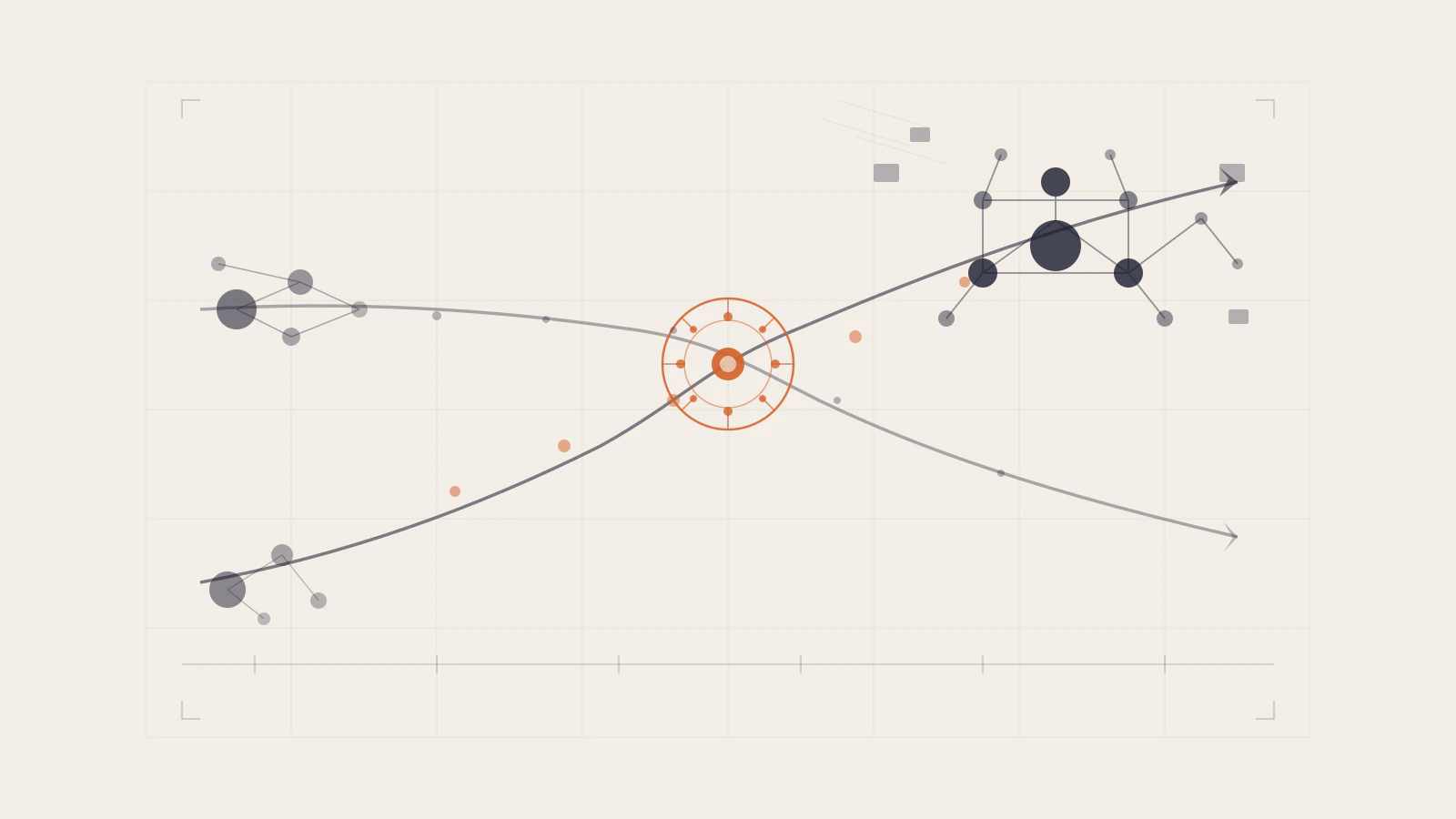
One curve rises sharply — the other levels off. Their crossing represents the point where the data science and AI community on GitHub grew large enough to shift the aggregate ranking.
The forces underneath Python’s rise
Three things converged to push Python to the top of that ranking.
Generative AI exploded on GitHub. Contributions to generative AI projects surged 59% year-over-year in 2024. The number of new generative AI projects increased by 98%. The toolchain that powers most of that work — model wrappers, fine-tuning scripts, inference servers, agent frameworks — is almost entirely Python. PyTorch, LangChain, the Hugging Face libraries, Ollama’s API clients: Python is the default language of the AI layer.
The GitHub community expanded well beyond software engineers. India saw a 28% year-over-year increase in developers on GitHub in 2024 and is on track to become the platform’s largest developer community by 2028. A significant portion of that growth comes from students, researchers, and data professionals entering the open source space — many of whom learned Python first. Contributions to generative AI projects from India grew 95% year-over-year.
Python is the first language for a growing share of new coders. The Stack Overflow 2024 developer survey, covering more than 65,000 developers, found that Python was the top language among those learning to code (66.4%), edging past JavaScript (60.4%) for that group. Among professional developers with extensive work experience, JavaScript still led at 64.6% versus Python at 46.9%. The next generation of developers is more likely to start with Python than previous cohorts were. That’s a real directional signal, even if it doesn’t represent today’s professional distribution.
Deb Nicholson, executive director of the Python Software Foundation, put it well when GitHub reached out for comment: “We couldn’t be more pleased to learn about Python’s continued rise in popularity on GitHub, especially coupled with the increased use of Jupyter Notebooks, data analysis, AI, and open source technology.” That “especially coupled with Jupyter Notebooks” is the key phrase. Python’s growth isn’t just among software engineers — it reflects a broader group of people who code but don’t primarily think of themselves as developers.
JavaScript is not shrinking — the pool got bigger
This is where the narrative usually breaks down.
JavaScript package consumption through the npm registry grew 15% year-over-year in 2024. The top 50 npm packages all saw net positive growth. That’s a maturing, expanding ecosystem — not one under pressure.
TypeScript is also worth separating from JavaScript in this conversation. TypeScript overtook Java in 2023 to enter GitHub’s top three languages, and it kept growing in 2024. TypeScript is a superset of JavaScript and lives in the same npm ecosystem; a developer who switches from JavaScript to TypeScript hasn’t left the JavaScript world. When you combine JavaScript and TypeScript activity, the combined community remained extremely active through 2024.
The “JavaScript is losing” framing also struggles against the Stack Overflow data. Professional developers still reported using JavaScript or TypeScript for the majority of their day-to-day work in 2024. The web still runs on JavaScript. Nothing in the GitHub data suggests that’s changing.
What changed is that the total number of GitHub users grew substantially — 1.4 million new developers made their first open source contribution in 2024 — and many of those new entrants came from data science, academia, and research backgrounds where Python is dominant. The JavaScript share of a larger total can look smaller even if the JavaScript absolute numbers are growing.
Check this before moving on
- Python overtook JavaScript by total activity across all contribution types, not by code pushes alone
- JavaScript still ranked first for code pushes in 2024
- TypeScript’s growth is separate from, and partly explains, the JavaScript percentage change
- npm package consumption grew 15% year-over-year in 2024 — the JavaScript ecosystem was not contracting
What “most used language” actually measures
The TIOBE index, which uses search engine query volume as a proxy for language interest, put Python at 17.76% of its ranking in early 2026, compared to JavaScript at 2.76%. That looks like a dramatic gap. But TIOBE’s methodology weights educational and how-to content heavily, and Python dominates introductory programming courses worldwide. TIOBE’s numbers reflect industry interest and learning activity more than production code distribution.
GitHub’s methodology measures a different thing — collaborative open source activity. And within that measurement, the breadth of the Python community now exceeds the breadth of the JavaScript community, even if JavaScript still leads in raw code output.
Neither ranking is wrong. They’re useful for different questions:
| What you’re trying to understand | More useful signal |
|---|---|
| Where developer attention is growing | GitHub activity (Python leading) |
| What most professional developers use daily | Stack Overflow survey data (JavaScript leading) |
| Which language has the broadest educational and industry footprint | TIOBE index (Python leading) |
| How much JavaScript code is being written and consumed | npm registry and code push data (JavaScript leading) |
The mistake is treating any single ranking as a complete picture. Python’s GitHub lead reflects a real change — who uses GitHub has changed — but it doesn’t tell you that JavaScript is less important in production systems or that TypeScript developers should pivot their careers.
What this means if you write JavaScript or TypeScript
For most web developers, the day-to-day implications are close to zero. Python has no foothold in the browser. The frontend ecosystem — React, Astro, Next.js, Svelte — is JavaScript and TypeScript all the way down. That isn’t going to change because Python is popular in data science.
There are two areas where I think the shift genuinely matters.
Working with AI integrations. Nearly every AI model library, fine-tuning framework, and inference server is Python-first. If you’re building an application that calls a model API, the documentation, examples, and community conversations will mostly be in Python. You don’t need to become a Python developer to work with these tools, but you do need to be comfortable reading Python code and understanding Python environments. If you’ve been a strict JS/TS developer, adding basic Python literacy to your toolset is worth the few hours it takes.
Understanding the direction of open source tooling. The fastest-growing category of open source projects on GitHub in 2024 was AI tooling — and those projects are predominantly Python. If you follow open source trends to stay ahead of what’s coming in web development, those Python-adjacent communities are now worth watching even if you never write a line of Python yourself. Libraries like LangChain and tools like Ollama started in Python and are now being adopted into JavaScript ecosystems with thin wrapper libraries. Knowing the Python original makes the JavaScript wrapper easier to understand and debug.
I’ll be honest: for the past few years, I wrote off the Python-versus-JavaScript conversation as overhyped. The data on Jupyter Notebooks and AI project activity changed my read on it. Not because Python is replacing JavaScript, but because the kinds of projects being built on GitHub have shifted, and ignoring that shift means missing context that’s increasingly relevant to full-stack work.
If you want to understand how JavaScript fits into a stack that includes TypeScript and backend types, the post on TypeScript for JavaScript developers covers that transition well. And if you’ve been wondering whether AI will change what developers actually do day-to-day, I explored that question in Will AI Replace Software Developers? — the Python numbers add a new angle to that conversation.
The definition of developer shifted — that’s what you’re seeing
Here’s what I think is the most honest way to read the 2024 ranking shift: the boundary of who GitHub calls a developer has moved.
In 2014, when GitHub started ranking language popularity, the platform was predominantly software engineers building applications. Python and JavaScript were competing in roughly the same space, for roughly the same kind of contributor. Python won a lot of scientific computing projects; JavaScript won the web. The populations overlapped substantially.
By 2024, that’s no longer true. Researchers running experiments in Jupyter notebooks, data analysts maintaining transformation pipelines, ML engineers building model fine-tuning scripts, academics publishing code for papers — these people are now on GitHub in significant numbers, and they mostly write Python. They file issues, comment on pull requests, and collaborate on repositories. GitHub counts all of that activity in its language rankings.
Python’s first-place ranking in 2024 is an accurate measurement of something real. That something is: the GitHub community grew beyond its software-engineering origins, and Python is the language of that broader technical community. It’s not a measurement of “software engineers now prefer Python over JavaScript” — because they don’t, at least not yet.
The JavaScript community didn’t shrink. The whole playing field got larger, and Python was the language of the new entrants.
If you’re a TypeScript developer building for the web, understanding how JavaScript execution contexts work remains as relevant as ever. The runtime that runs your code didn’t change because Python had a good year on GitHub. What changed is the shape of the community you’re part of — and that’s worth knowing, even if it doesn’t change what you ship tomorrow.
The most important lesson I took from digging into this data: language rankings are demographic measurements as much as they are technical ones. When Python ranks first on GitHub, the question worth asking isn’t “should I switch languages?” It’s “who joined this platform, and what are they building?” The answers to those questions tell you more about where computing is heading than any single ranking ever will.
Sources
- Octoverse: AI leads Python to top language as the number of global developers surges — GitHub Blog
- Stack Overflow Developer Survey 2024 — Technology section
- TIOBE Index — tiobe.com
- The state of open source and rise of AI in 2023 — Octoverse 2023, GitHub Blog
- How AI is reshaping developer choice — Octoverse 2025 analysis, GitHub Blog